
- +36 70 5675337
- k3sewingstudio@gmail.com
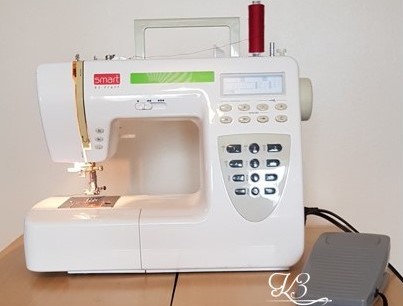
A good machine is the foundation of sewing. Whether you are just getting to know sewing or are already an experienced sewer, it is worth knowing what types of machines are available and how they differ. Today, there is a huge range of domestic sewing machines – from the classic all-rounder to overlockers, coverstitch machines and even embroidery machines.
In this guide, I have collected the most important types of machines, along with practical advice and their real advantages and disadvantages, to help you find your way around them more easily.
This is the first machine for most sewers. Straight stitch, zigzag, buttonholes and basic edge finishing – it has everything you need for everyday sewing.
It is perfect for beginners and will serve you well for a long time – later, you only need to add specialist presser feet or needles.
An overlocker does not replace a domestic sewing machine, but it complements it perfectly. Its time comes when you want to work with stretch fabrics.

One of the great advantages of an overlocker is that it trims the fabric edge as you sew. However, there are situations when this is not desirable – for example, if you are sewing an edge that has already been cut precisely to size, or you are working on an area where you cannot afford to lose even a millimetre.
In this case, the knife can be disengaged, and the machine will continue sewing without cutting, simply finishing the edge. If you can pay attention to this level of precision as well, you are already working at a more advanced level. Although this is not particularly recommended, as the machine was not designed for this purpose, it can be done if necessary.
If you sew a lot of stretch fabrics, an overlocker is a huge step up in both quality and convenience.
A coverstitch machine creates the classic double (or triple) row of stitching you see at the bottom of T-shirts. The seam has parallel rows of stitches on the top and looped stitching underneath – just like on ready-made garments.
Anyone who sews a lot of sweatshirts, T-shirts or garments made from stretch fabrics will love it.
Modern embroidery machines can read designs from a USB drive, can be programmed using a display and are incredibly precise.
These are not industrial machines, but they are considerably more robust than traditional domestic models.
1. What fabrics do you sew most often?
If, for example, you sew jersey, sooner or later you will need an overlocker.
2. How much space do you have?
An overlocker + coverstitch machine combination is very useful, but takes up quite a lot of space.
3. How much experience do you have when you start?
A simple domestic sewing machine may be perfectly adequate for years.
4. Budget and how much you will actually use it
A more expensive machine does not necessarily give you more – if you do not make use of it, it will simply gather dust.
5. Spare parts, servicing, needles and presser feet
Always check whether they are easy to obtain.
A good sewing machine is not necessarily the most expensive one, but the one that suits your needs.
A basic domestic sewing machine can serve you well for many years, and as your skills develop, specialist machines – overlockers, coverstitch machines and embroidery machines – open up new possibilities.
✂️💛
If your machine is reliable and you know its limitations, sewing really will become a pleasure – not a struggle.